Educator success story
Experiential learning through the joy of play
Discover how Andra Diaconescu uses Simbound to turn engineering students at the Politehnica University of Timișoara into motivated, data-driven digital marketers.
“Simbound has replaced traditional exam-driven anxiety with the rewarding joy of competition.”
- 1
How are you currently using Simbound in your teaching?
Please share your institution, study programme, course duration (in weeks), and how the simulation fits into your curriculum.
At the Faculty of Automation and Computers, Politehnica University of Timișoara (UPT), the Simbound platform is integrated into the 14-week Digital Marketing and Analytics master course as a core laboratory component, allowing engineering students to gain practical experience in data-driven business analytics and conversion strategies across 5 operational simulation rounds.
- 2
What is your favourite Simbound feature, and why?
Is it the AI-powered tools, competitive learning environment, realistic marketing decisions, or the variety of digital marketing topics covered?
My favorite feature is the competitive learning environment combined with realistic marketing decisions. For engineering students at UPT, this combination transforms abstract data into a dynamic, high-stakes scenario. The competitive environment immediately drives high engagement, as teams actively monitor the leaderboard and adjust their strategies in real time to outmaneuver their peers. This competitive drive forces them to treat the realistic marketing decisions, such as budget allocation, keyword bidding, and A/B testing, not just as academic exercises, but as critical components of a live market strategy where every technical metric directly impacts their overall profitability and market share.
- 3
What has changed in your classroom since introducing Simbound?
Have you noticed differences in student engagement, feedback, learning outcomes, or academic performance?
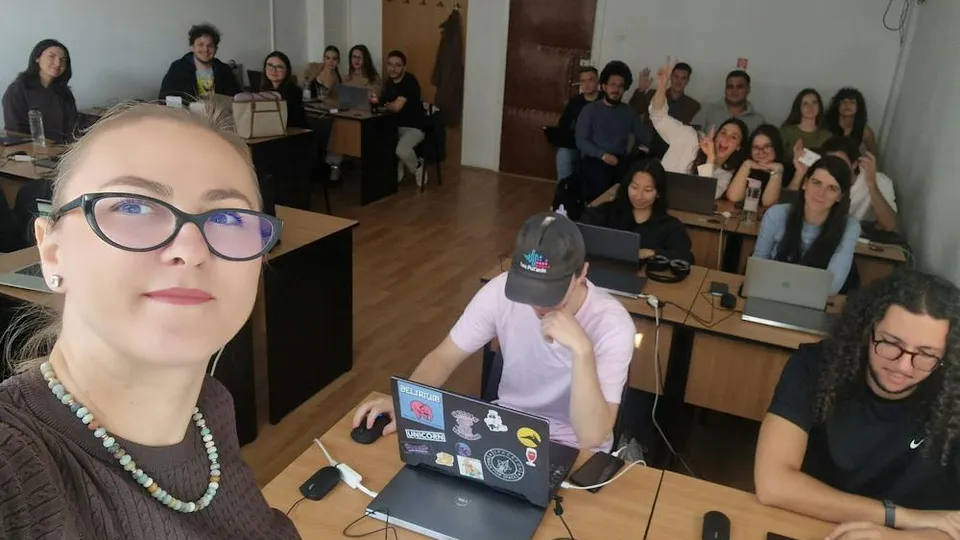
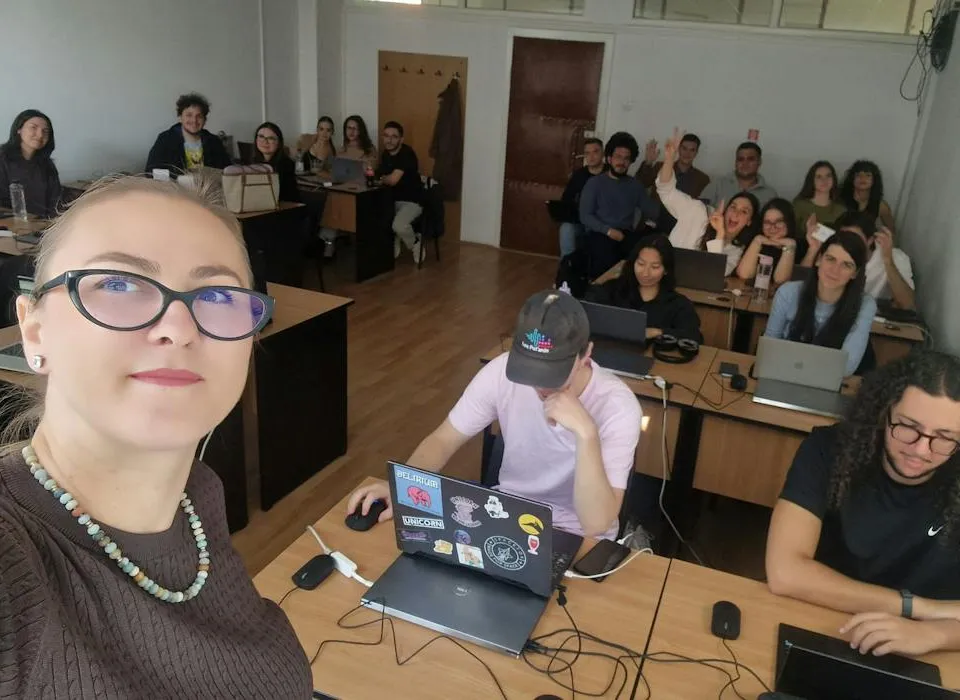
The single greatest change since introducing Simbound has been the pure joy of experiential learning and the massive surge in student engagement. By shifting from static theory to game-based learning, the entire classroom dynamic has transformed in several noticeable ways:
- Learning Through the Joy of Play: Because Simbound operates as a realistic simulation game, students no longer view the laboratory as just another mandatory assignment. There is a genuine sense of fun and excitement in the room as they test creative strategies, watch their decisions play out, and see their efforts directly reflected on the live leaderboard.
- Voluntary, High-Energy Engagement: The gamified element has made learning highly addictive in the best possible way. Students become so completely absorbed in optimizing their virtual campaigns, analyzing traffic, and outmaneuvering rival teams that they are frequently surprised when the class session ends. They routinely go above and beyond the basic requirements, working collaboratively outside of class hours simply for the thrill of winning.
- An Active, Competitive Buzz: The friendly competition infuses the classroom with a lively energy. Instead of passively listening to a lecture, students are actively debating, celebrating successful conversion rates, and treating failures as fun puzzles to solve rather than academic setbacks.
For me, Simbound has replaced traditional exam-driven anxiety with the rewarding joy of competition, transforming engineering students from passive listeners into highly motivated, enthusiastic digital marketers.
- 4
What advice would you give educators introducing marketing simulations into their teaching for the first time?
Are there any practical tips or lessons learned you would share?
My main advice for educators introducing marketing simulations for the first time is not to let students become passive users of a platform, but to guide them to think strategically by directly linking their decisions to data. Here are a few practical tips and lessons learned from my experience at UPT:
- Utilize the Trial Round for onboarding: Do not throw students directly into the competition. Dedicate the first week to a test round with zero impact on grading, allowing them to figure out the interface and game mechanics without the pressure of failure.
- Emphasize analytics over luck or intuition: Students (especially those with a technical background) can be tempted to tweak settings randomly hoping for a better result. Encourage them to justify every business decision based on metrics from the previous round (e.g., adjusting the PPC budget based on CTR or conversion rates).
- Turn failure into a learning opportunity: In the early rounds, some teams will lose virtual money or generate a negative ROI. Create a safe space where these mistakes are analyzed publicly as valuable case studies for optimization in the upcoming rounds.
- Leverage the leaderboard as a motivational tool: Use the live ranking within the platform to spark constructive competition. Doing a quick review at the start of each lab session to highlight the "market moves" made by the top-performing teams massively boosts engagement for everyone.
- 5
What’s the next big development you’d like to explore through marketing simulations?
Whether it’s emerging digital marketing channels, new audiences, AI, data privacy, or something entirely different, what excites you most about the future of marketing education?
The next big development I am most excited to explore is immersive marketing. What excites me most about the future of marketing education is the opportunity to move beyond the two-dimensional screens of traditional campaigns. Integrating Virtual Reality (VR), Augmented Reality (AR), and interactive 3D virtual environments would allow engineering students at UPT to apply their data analytics skills in a completely new dimension. Instead of optimizing text ads or emails, they could design and analyze immersive customer journeys, tracking spatial performance metrics such as 3D environment heatmaps, virtual object interaction rates, and attention span durations within three-dimensional spaces.
Additional insights
A few more quick questions to get to know their experience.
-
How do you structure the simulation experience?
The simulation is exclusively team-based, mirroring the collaborative nature of real-world digital marketing and analytics agencies.
- Weeks 1–2: Students form teams of 4 and distribute roles by strength (e.g. data analysis, technical SEO setup, content/copywriting).
- Weeks 3–4: A trial round that does not affect the final grade, running alongside foundational lectures on digital marketing metrics.
- Weeks 5–12: The 5 operational rounds.
- Weeks 13–14: Final presentations, analysis against competitors and a comprehensive analytical report.
-
How do you assess student performance?
Assessment focuses primarily on strategic decisions and the students’ ability to justify them using data, rather than relying solely on the automated results generated by the simulation. The main objective is to develop analytical and strategic thinking.
-
What surprised you most after introducing Simbound?
How dramatically the technical mindset of my engineering students influenced their approach. I expected a purely mathematical and somewhat rigid precision, but their algorithmic thinking quickly transformed into highly creative, competitive business strategies.
-
How do you encourage students to learn from their results, whether poor or solid?
I place a heavy emphasis on collective debriefing sessions and reframing failure as a scientific experiment. A round with negative profits or a low ROI is not an academic failure, but simply a data set showing what did not work.
-
How much guidance do you provide during the simulation?
I maintain a deliberate balance between independent discovery and active coaching, acting as a strategic consultant rather than an instructor who dictates answers. This lets students develop critical problem-solving skills while receiving enough support to avoid counterproductive frustration.
Read more Educator Success Stories
Teachers on what changed in their classroom once students started running simulated campaigns.

Marcin Wieczerzycki
Poznań University of Economics and Business
“With Simbound, students actually try to get as good as possible.”
Read interview
Margaret Dunfee
Northern Arizona University
“Students work hard to understand what drives results and make adjustments to improve their results”
Read interview
Moritz Joerling
EM Lyon Business School
“Students come away with a better understanding of the customer journey and learn to think from the consumer’s perspective.”
Read interview
See how Simbound can improve your course
Book a demo to get access and we will walk you through the simulation, step by step.