For students or those looking to change careers (career switchers), this requirement seems like a vicious cycle that’s impossible to break. How can you gain experience if no one will hire you without it?
Here’s the good news: if you don’t have the skills, resources or time to go through a formal education program you can still succeed in this endeavor as many industry professionals who are self-taught will let you know. Even if you’re now a student of a non-business discipline, or looking to change careers, or simply curious enough to take the initiative, the Simbound platform is open to you.
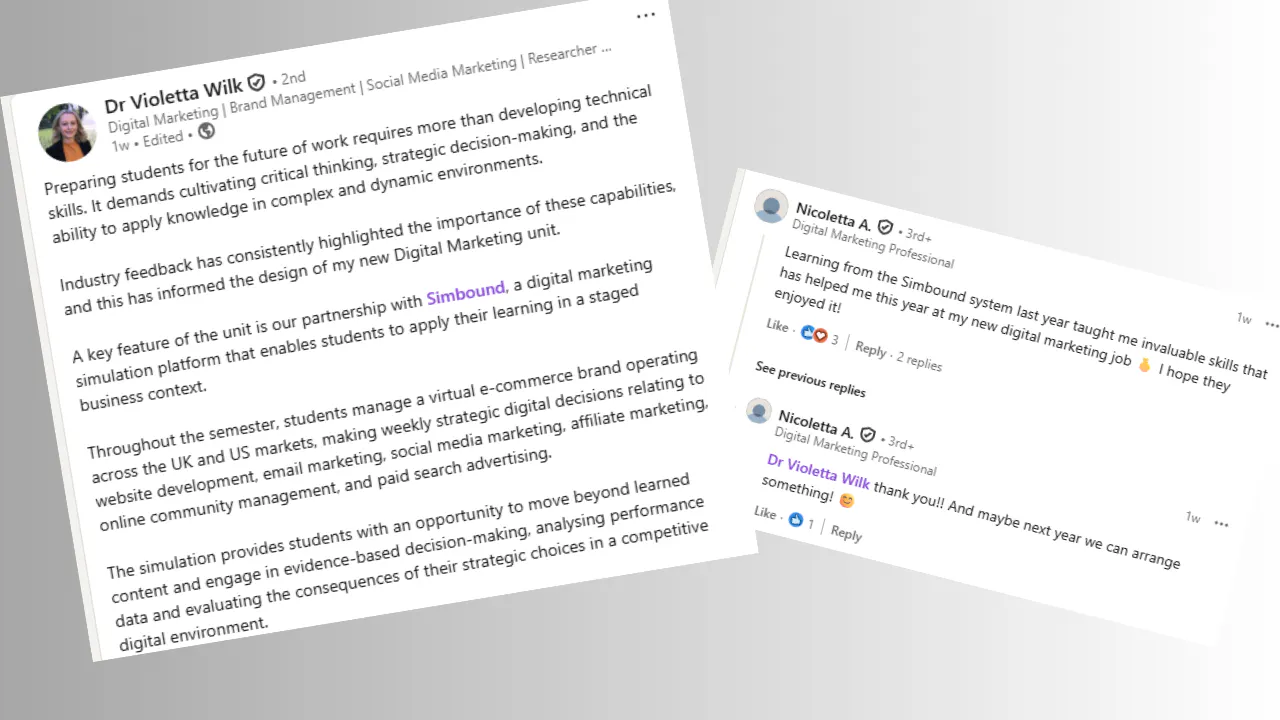
Using a platform like Simbound isn’t just a fad of a modern learning exercise—it can turn out to be a direct launchpad into the job market. Here is how a university professor described how the simulation helped her students. The community’s response was even more encouraging: a former user of the simulation confirmed through her comment that the experience she gained in the simulation was what helped her land the job she now holds in digital marketing.
Customize Your Learning Experience: The New Simbound Scenario Builder
This is where it starts to get interesting. With a brand new option announced for July 2026 where you will be able to create your very own learning scenario within the simulation, the entire learning experience will adapt to you—not the other way around. You can tailor your preparation exactly to the field or business niche you’re targeting with your job search—so you can learn in a way that’s tailored to your future employer's needs.
As part of this setup, you can choose which topics you want to learn. Maybe you want to solidify your foundational knowledge first; maybe you want to jump right into the more detailed aspects of running campaigns. With this new feature, you are able to customize your entire learning process and set the complexity as high or as low as needed.
Learn to leverage AI
Every marketing specialist is currently being asked the same question: do you really know how to use AI? Simbound integrates the answer into the learning experience. Instead of simply telling you that AI matters, the platform shows you how to put it to work—writing ad copy, generating keyword ideas, interpreting your campaign data, and streamlining tasks so you can focus your energy on high-impact decisions in strategy and risk. By the end, you’ll know how to use AI as your teammate—which is exactly the skill employers are looking for today.
So how does a simulation game turn you into a promising candidate for employers—and what specific jobs can you land with its help?
The six simulation modules that cover the entire digital ecosystem
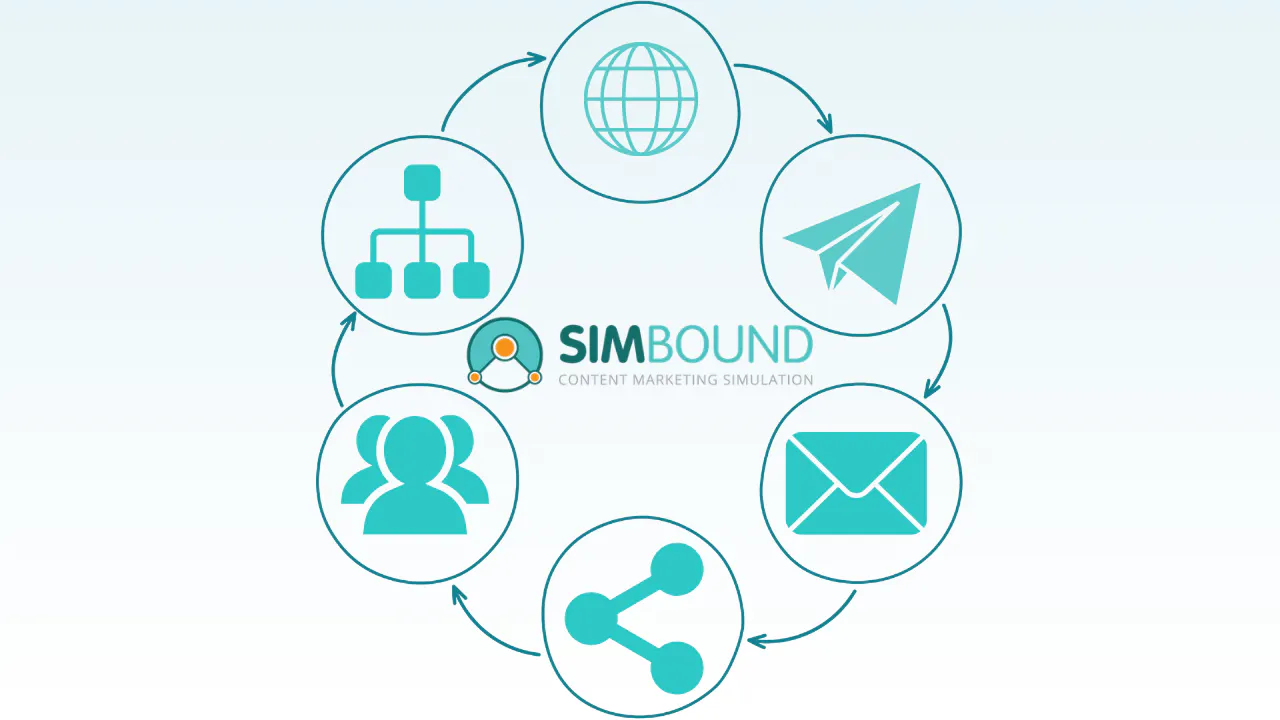
Before we talk about jobs, it’s worth understanding why the Simbound experience is considered so relevant: the simulation doesn’t keep you confined to a single “method,” but takes you through all the essential channels of modern marketing. Specifically, you’ll work on six software modules:
- WEB – you’ll build and optimize websites, understand page structure and user experience.
- SEA (Search Engine Advertising) – you’ll create and manage paid search engine campaigns, working with bids, budgets, and keywords.
- Email – you’ll plan email marketing campaigns, segment audiences, and measure open and conversion rates.
- SMM (Social Media Marketing) – you’ll build your social media presence and run campaigns through audience-targeted posts and campaigns.
- Community – you’ll learn to manage and grow a community around a brand.
- Affiliate – you’ll discover how affiliate marketing and performance-based partnerships work.
It’s precisely this comprehensive coverage that turns you into a “T-shaped” marketer: someone who understands the whole picture, not just one part of it.
What kinds of jobs can you get if you enroll in Simbound?

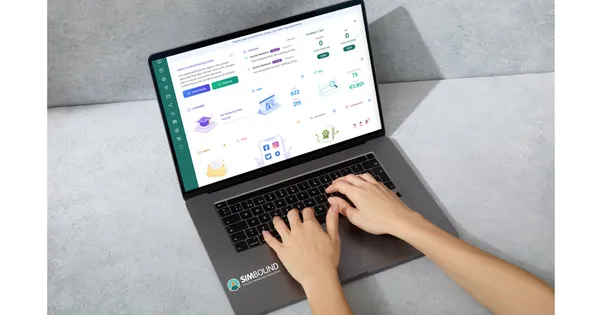
Simbound doesn’t just teach you definitions. The platform puts you in the role of a manager who must decide on (virtual) budgets, creates ad campaigns, analyzes keywords, and optimizes websites for search engines.
Here are some of the roles you can aim for right after completing the modules:
Junior SEO Specialist / Content Marketer – because you’ve already learned how on-page optimization works, how to choose keywords based on search volume and intent, and how to structure a page to convert visitors into customers.
PPC / Performance Marketer – in the simulation, you’ll create and manage search advertising budgets, adjust bids, and see in real time how a wrong decision can burn through your budget or how a good one can increase your conversions.
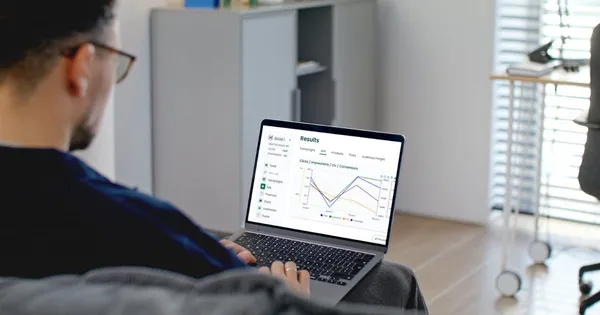
Digital Marketing Analyst / Web Analytics Specialist – Simbound provides you with a comprehensive data dashboard. If you know how to interpret metrics such as CTR, ROI, or bounce rate within the platform, you’ll be ready to do the same for real clients.
Digital Account Manager / Strategist (for agencies) – the simulation can be played in teams so you’ll learn to collaborate, justify your decisions to colleagues, present results and develop a macro strategy—just like in an agency.
Email & CRM Specialist or Affiliate Manager – thanks to dedicated simulation software modules, you can target niche roles that are increasingly in demand on the market and differentiate your candidate profile.
Already in the field? How the simulation helps you stay relevant
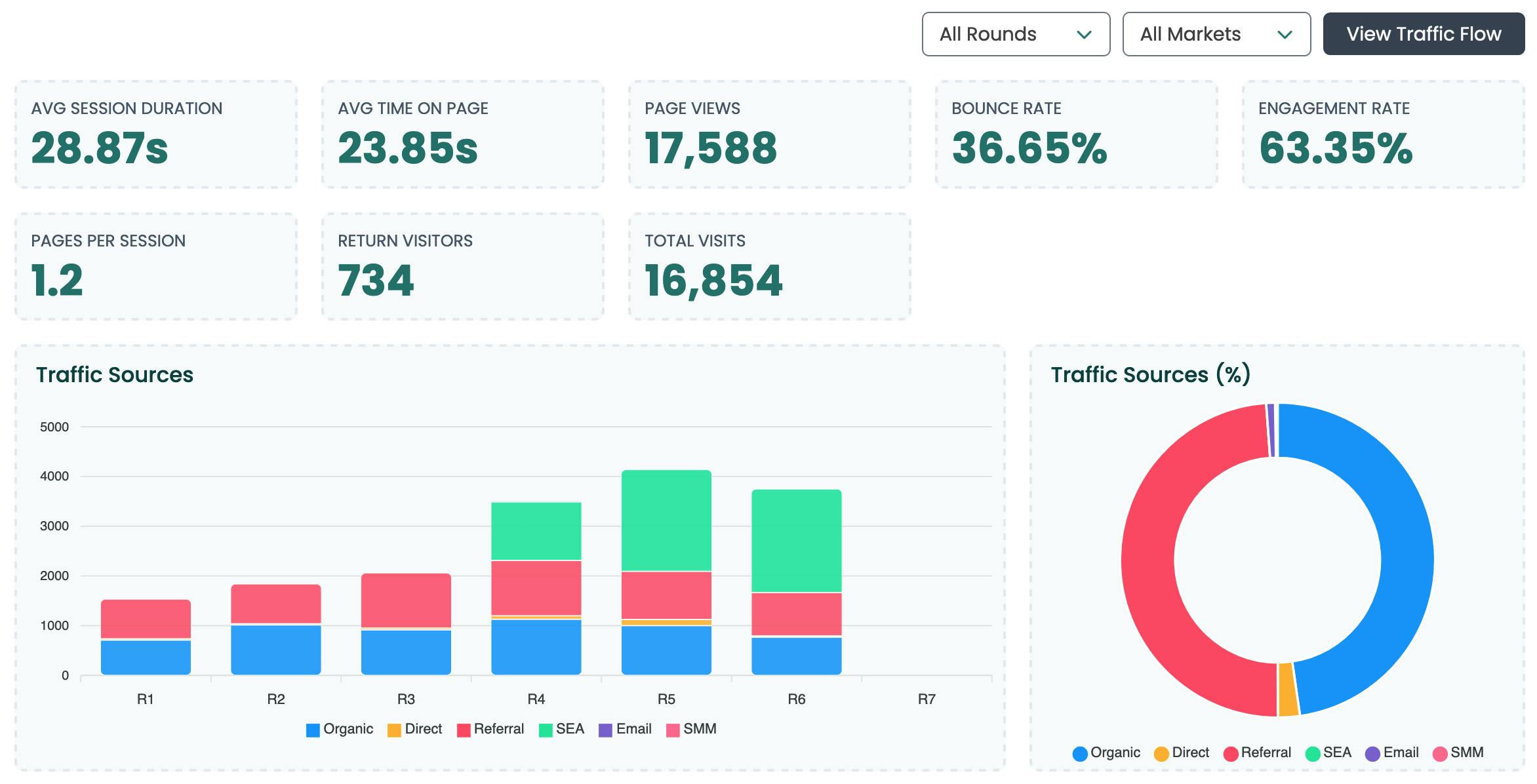
The digital marketing market is changing at a rapid pace. Algorithms are changing, consumer behavior is evolving, and last year’s tactics may be useless today. For active professionals, Simbound functions as a “gym” for skills.
1. Testing strategies without financial risk. In real life, if you want to test aggressive bidding on a real budget, you’re risking the client’s money. In Simbound, you can be as bold as you want, see what works, and then safely apply it to your work.
2. Breaking out of the “specialization bubble.” Many specialists become very good at a single niche. To advance to management positions (Head of Marketing, CMO), you need a big-picture view. Simbound forces you to connect the dots: how SEO influences SEA and how both depend on the user experience on the site.
3. Rapidly updating your skills. The platform evolves alongside the market. Updated scenarios help you internalize the new dynamics of e-commerce and advertising much faster than by reading theoretical articles.
Certification and visibility: your results, shared with Marketing Squads
A tangible benefit you shouldn’t miss: at the end of the simulation, as a student, you receive a certificate attesting to the skills you’ve acquired—something you can immediately add to your LinkedIn profile or resume.
Plus, you don’t have to keep your results to yourself. You can share your performance by posting it on Marketing Squads, where you build a visible reputation within the community. For an employer reviewing your profile, the difference between “I took a course” and “I achieved these measurable results—here’s the proof” is huge.
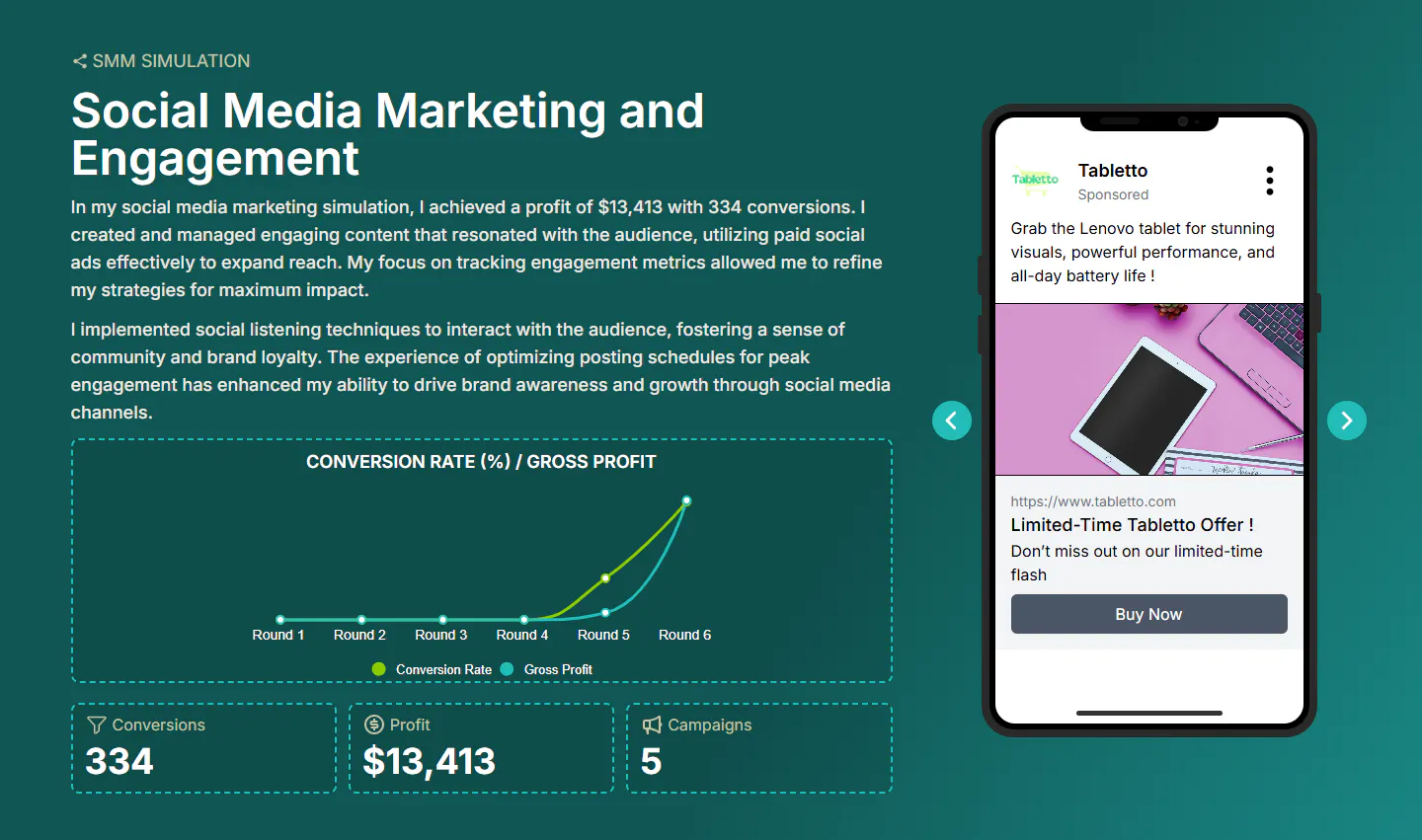
What should you include on your resume after using Simbound?
Don’t just write “I participated in a simulation.” Turn the experience into a hiring asset. Mention it in the “Experience” or “Projects” section:
Digital Marketing Simulation Practitioner | Simbound
- I managed a virtual marketing budget of [X] €, optimizing SEA, email, and SMM campaigns.
- I analyzed performance metrics (CTR, CPC, conversions) and improved ROI by [X]% over the course of the rounds.
- I collaborated with a team of three on keyword strategy and landing page optimization.
The conclusion is this: employers want people who have already been through the fire of business decision-making. Whether you’re just starting out or a senior marketer looking to test your limits, Simbound offers you exactly what makes the difference in an interview: practical confidence—and now, the certificate to prove it.