Every semester I watch the same thing happen. Two weeks in, my digital marketing students are frustrated. They've read about SEO, they can define a conversion funnel, they can recite what a good ad looks like. Then I put them in front of a simulator and ask them to actually run a store, and it all falls apart.
That collapse is not a bad thing. It shows how reality is much more complex than what we see in theory. And to know how to use the concepts in a real-life context is challenging, and it's also where the real learning starts.

Not all simulators are the same
In recent years I have been teaching with business simulators, and I've come to a firm conviction about how they should be used. The difference between two kinds of simulator matters more than most people assume.
In the first kind, students compete against the machine. The scenarios are predefined, the "correct" analyses are baked in, and the software is essentially checking whether you reached an answer it already knows. These are useful for drilling concepts, but they have a ceiling. The student is playing against a script that has already been defined and the learning process is somewhat limited to what has been pre-decided by the simulation.
In the second approach, students compete against each other within a shared market. No one's outcome is fixed; instead, success depends entirely on the collective decisions of the group. While this is harder to run and more demanding to facilitate, it is the only version that leverages a simulator's true strengths. After all, a responsive market is the entire reason a simulator exists. As students quickly learn to navigate the platform, competition intensifies, outcomes become more complex, and the overall learning experience deepens. Because there is no predefined script, this type of simulator creates a highly realistic learning process. Ultimately, I prefer this model because it better reflects the complexities of a real-world market.
What the tool does, and what it deliberately leaves to the student
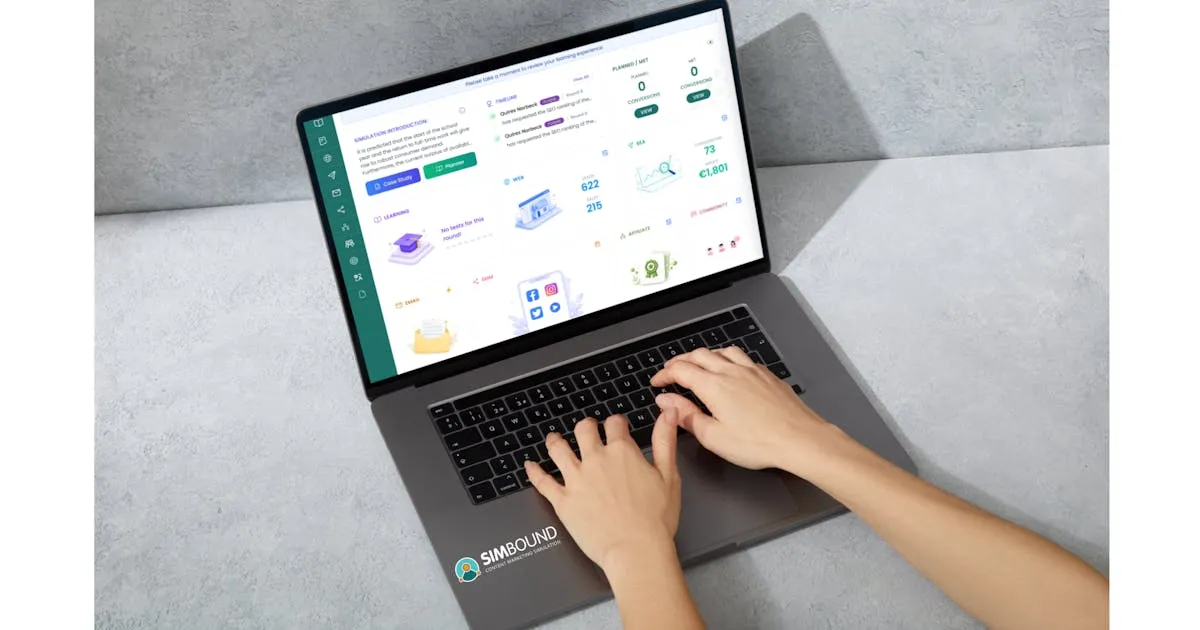
The simulator I usually use for Digital Marketing courses is Simbound. It is a solution where students run an online store selling tablets, and their main score is cumulative profit (there are other indicators, of course, but often this is what we usually check for overall performance). They decide which brands of tablets they will sell, the price they will sell them for, and which market to target. They build a homepage and a landing page for each product, using structured fields with prompts and examples so nobody drowns in HTML programming; after all, the objective of the course is the strategy, not the technical part of the digital market.
Then come the mechanisms that make or break a digital business: SEO, paid search, email, social, communities, affiliates. Different tools, each with a specific objective.
What makes it work isn't the software on its own. It's how the rounds are sequenced against the theory. It is the connection with the syllabus that makes the difference.
Sequencing is the pedagogy
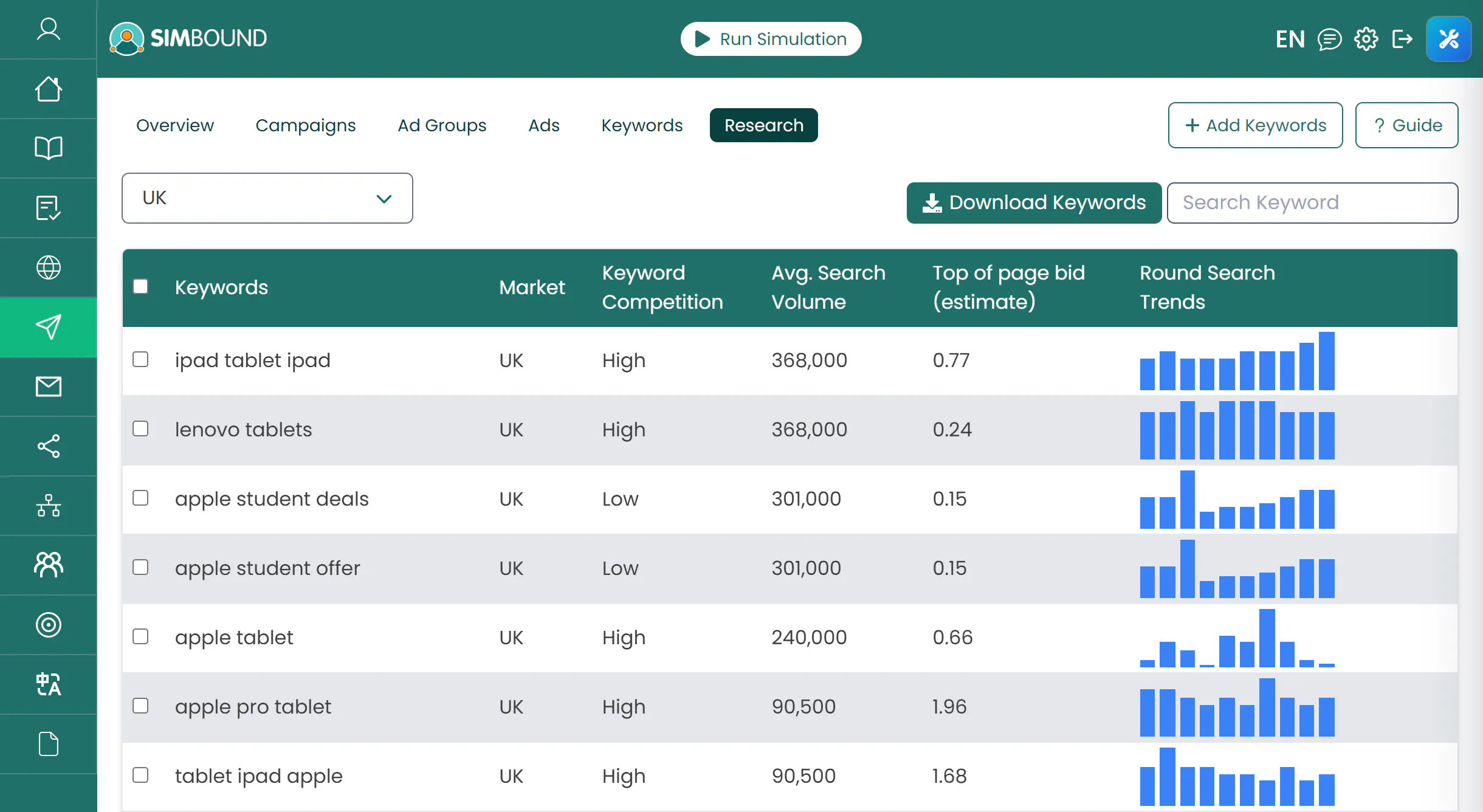
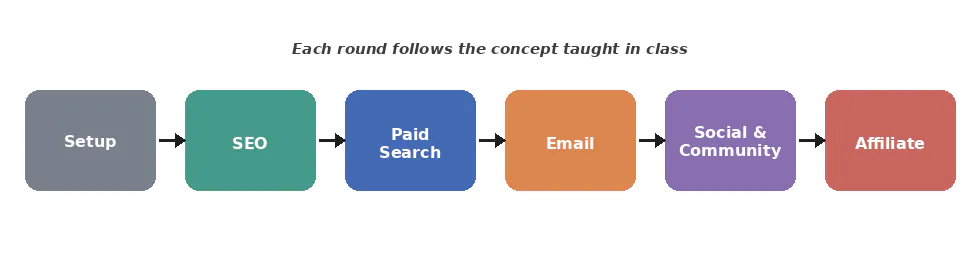
I don't hand them everything at once. We start with setup. Then we teach SEO, and that's the round they work on organic ranking. The next round follows our discussion of paid search, so they build campaigns and bid on keywords. Then email marketing. Then social and community management. Each concept gets discussed in class, and then they apply it in the round that follows. By the end, it usually takes six to eight rounds; we've walked the main topics of digital marketing, and students have not just heard about each channel but felt how it behaves and how the channels feed one another.
That interaction is the thing lectures cannot deliver. In the real world, nothing works in isolation: paid clicks can be converted into email contacts you never pay for again; affiliate links quietly lift your organic ranking; a weak landing page drags down the quality score of every ad pointing at it. A live-market simulation with staged features lets students discover those dependencies themselves, where they are only risking losing points, and not real marketing budgets that could hurt their performance in the workplace.
The complexity of the simulation reflects the complexity of the market
One important thing we need to address is that a good simulator must accurately reflect the market's actual complexity. If a simulator is too easy to use, it is usually because it captures only a small fraction of that complexity. While an easy tool might feel fun and approachable at first, its learning outcomes are ultimately limited. Generally, the simpler a simulator is, the less it connects to real-world market dynamics.
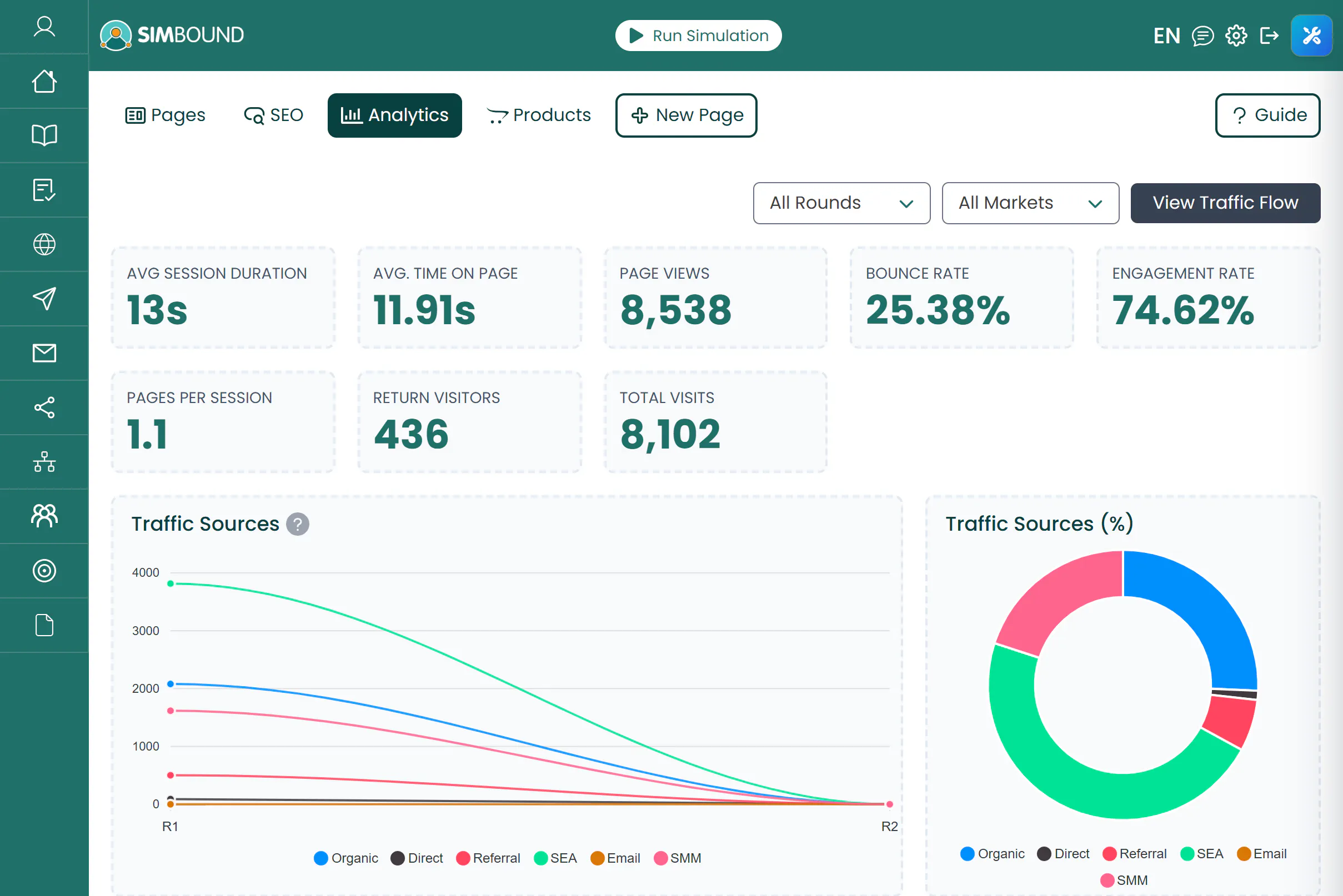
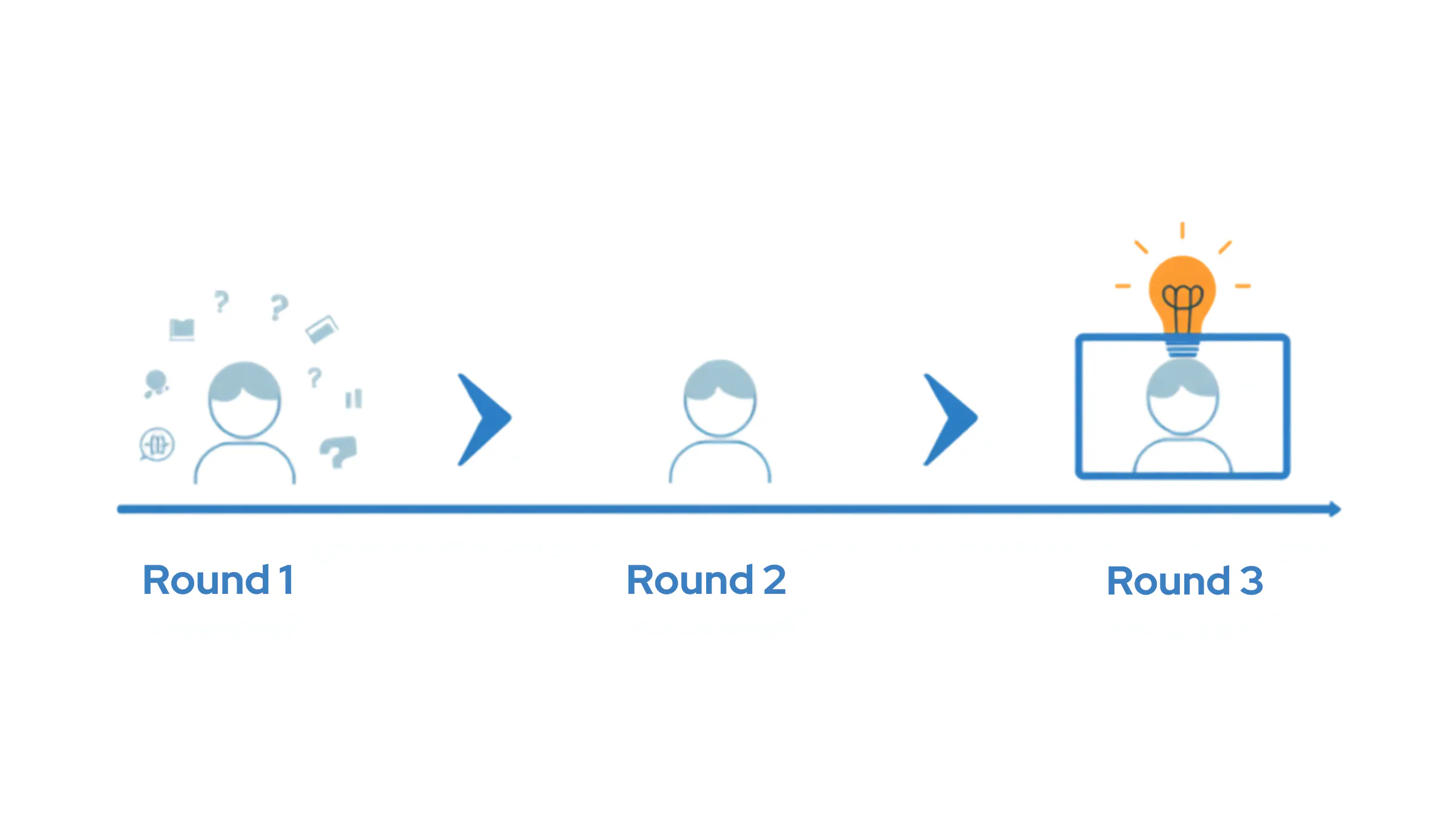
Because a truly effective simulator is complex, it is often challenging to use during the first two rounds. Students may feel overwhelmed by the sheer volume of information and the number of decisions they have to make, but this simply reflects the reality of the market. For example, in the Simbound simulator, students must analyze real digital marketing metrics such as: impressions, click-through rates, quality scores, bounce rates, and conversions.
Initially, this data overload may make some students feel a bit anxious. They are still not familiar with the indicators. Why did impressions climb while conversions stayed flat? For a while, they can't tell, and not knowing what to do may cause them a bit of anxiety.
However, this struggle is part of a highly valuable learning process. Usually by the third round, something changes: all confusion resolves into a clear signal. Students stop reading a metric merely as a definition and start using it as a diagnosis. They realize that high traffic with low sales points to a problem with pricing or the offer, while low traffic with good conversions highlights a need for better SEO or paid search. As they grow accustomed to the simulator, they gain confidence, and the data starts to make sense. That shift from knowing a definition to developing real intuition is the ultimate pedagogical payoff, and you cannot achieve it without going through this initial struggle.
Why this teaches better
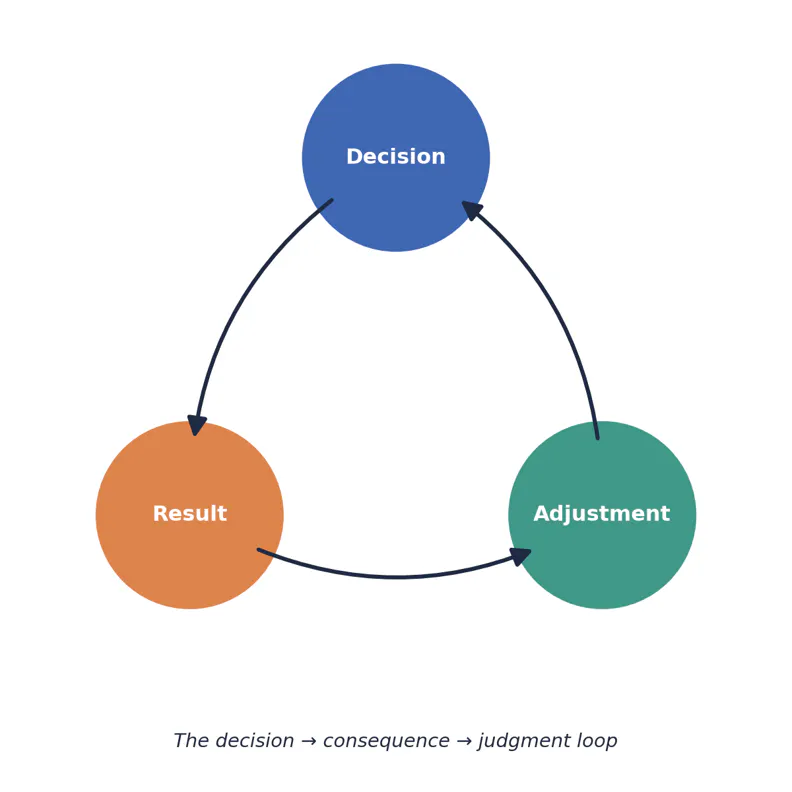
Simulators, used well, teach better than most alternatives. And that is not because they're fun or modern, but because they compress the loop between decision and consequence. A student makes a choice, sees the result, and adjusts, repeatedly, fast, in a context that punishes and rewards realistically. That loop is how expertise forms. Reading about a market gives you knowledge; being accountable to one gives you judgment.
And judgment is exactly what the tool cannot supply. It measures execution, but the decisions that decide the outcome, such as market positioning, target customer, product choice, and differentiation, live outside the software. That's the feature I value most as a teacher: the simulation doesn't do the strategic thinking; it naturally influences the strategic thinking to happen, then shows you the cost of getting it wrong.
Grading what they actually learned
Because performance is real and observable, it can anchor the practical grade for the course. But I don't stop at the scoreboard because a team can do well through a lucky round or badly through unlucky timing. So I always require a reflective report: what did you learn, what would you do differently, what surprised you? That brings the students to use their own words and their own understanding in the evaluation, and it often reveals more growth than the final ranking does.

One thing I'd tell other educators
Don't reach for a simulator to make a class feel innovative. Reach for it when you want students to sit inside the consequences of their own thinking. Choose the version where the market pushes back. Sequence it against the theory so each concept lands with weight. And expect the early discomfort. It isn't a flaw in the tool. It's the sound of someone learning to think like a practitioner.
That, to me, is what teaching with simulators is really for.