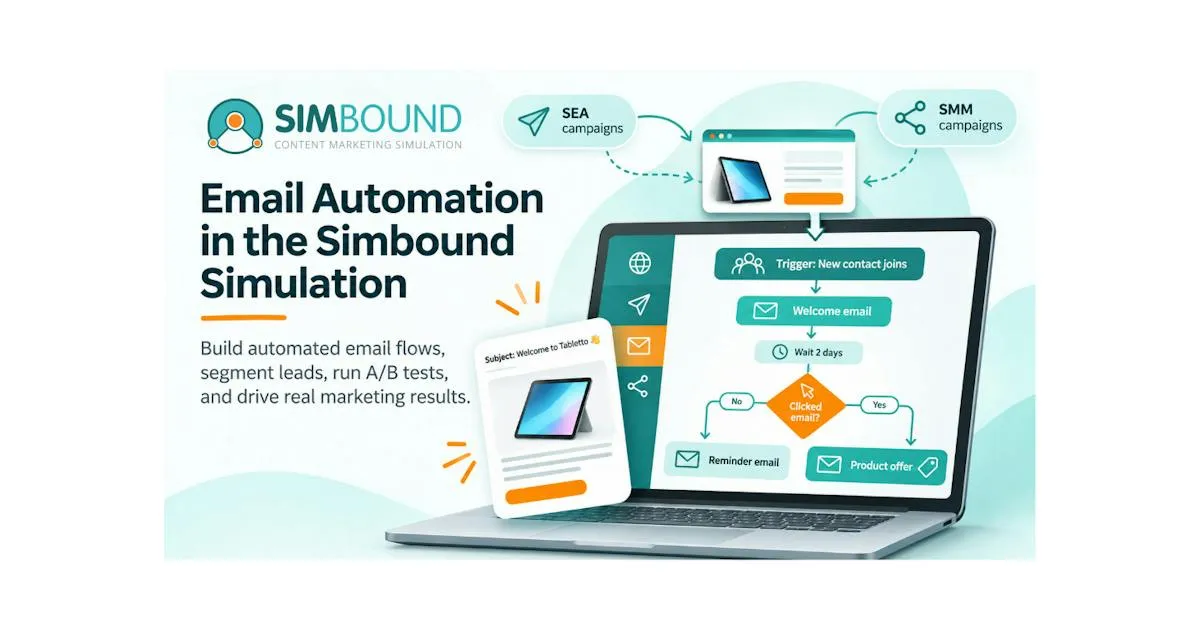
Why teaching email automation is important
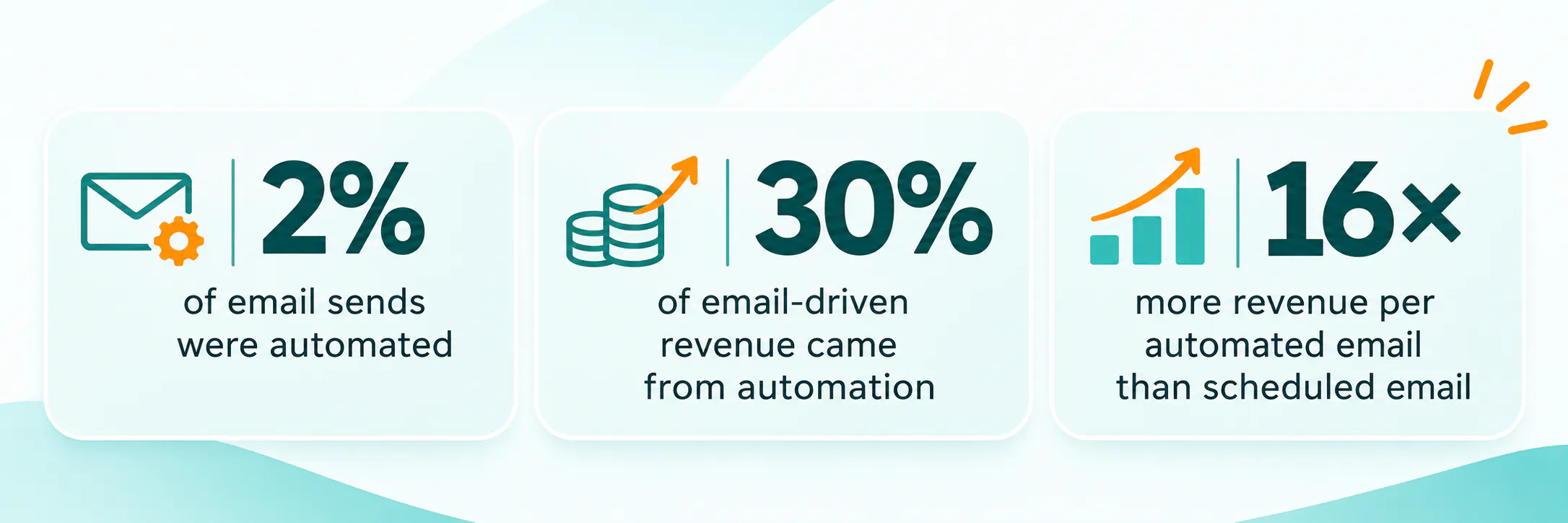
Recent industry research illustrates the potential: analyzing 2025 activity across 150,000 brands, it found that:
Email automation allows businesses to communicate with customers through personalized, trigger-based email sequences, without manually managing every message. From welcoming new subscribers to recovering abandoned shopping carts and re-engaging inactive customers, automation helps businesses deliver relevant messages at the right moment. For small marketing teams, the advantages are particularly valuable: less time spent on repetitive tasks, more consistent customer engagement, and the ability to manage increasingly complex customer journeys without expanding headcount.
Over time, a well-designed automation can continue generating website visits, leads, and sales while marketers focus on strategy, creativity, and optimization.
The Importance of making the right decisions
The same research found that abandoned-cart and welcome emails generated 76% of automation-driven orders. Both these automations are available within Simbound. These findings demonstrate the importance of reaching customers when their behavior indicates genuine interest, rather than simply sending more messages.
Learning email automation with Simbound
The new Simbound Email Automation simulation gives students hands-on experience designing, managing, and evaluating automated customer communication journeys within a realistic digital marketing environment.
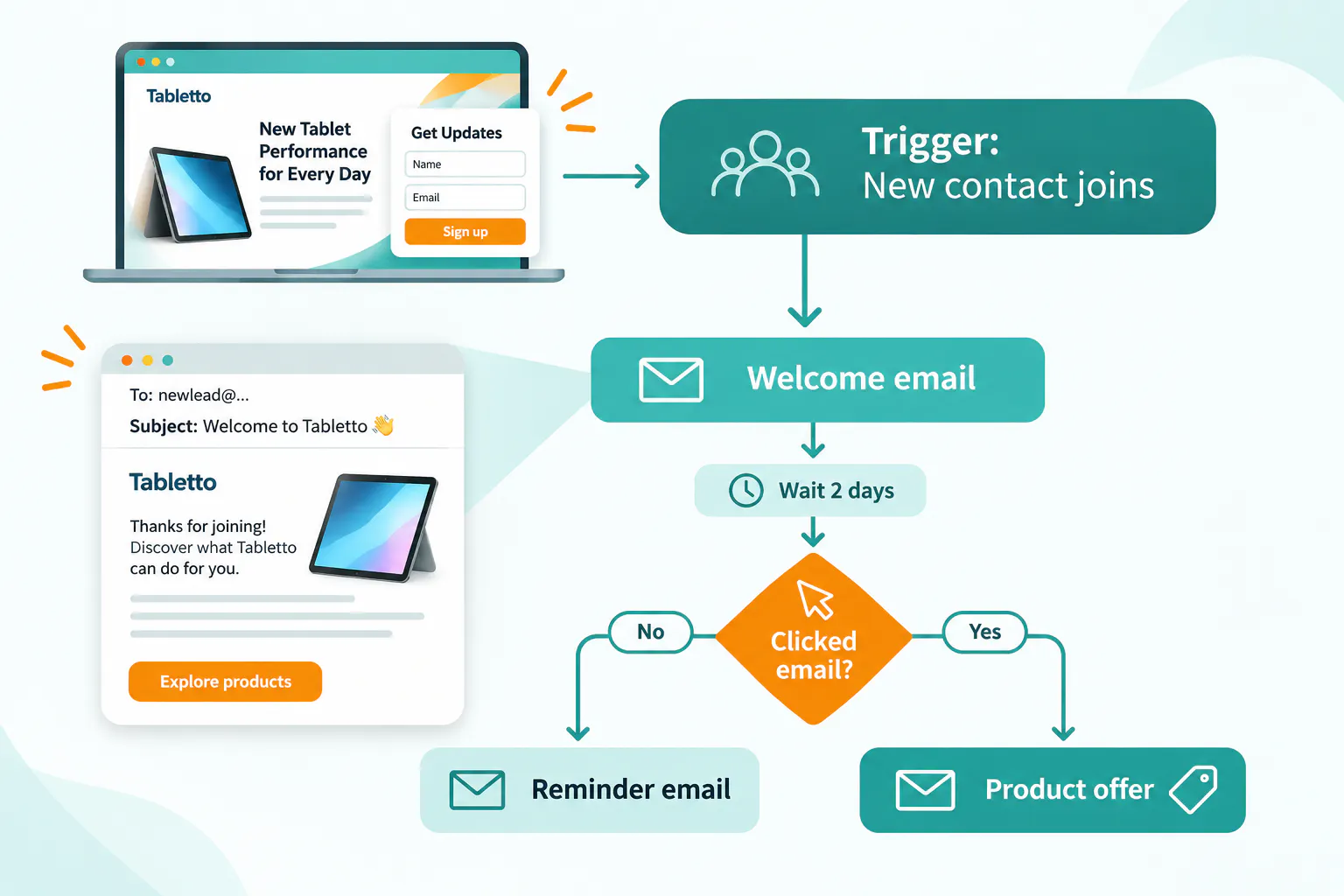
Instead of sending isolated email campaigns, students can build sequences based on customer actions, such as signing up, viewing a product, abandoning a shopping cart, making a purchase, or becoming inactive.
Students select a marketing goal, design email templates, introduce delays, set conditions and create A/B tests. They can also choose between pre-configured triggers and selected contact groups, allowing them to explore different approaches to customer engagement.
The simulation integrates email automation with other Simbound activities, including Search Engine Advertising (SEA), Social Media Marketing (SMM), website management, and web analytics.
Connecting the digital marketing journey
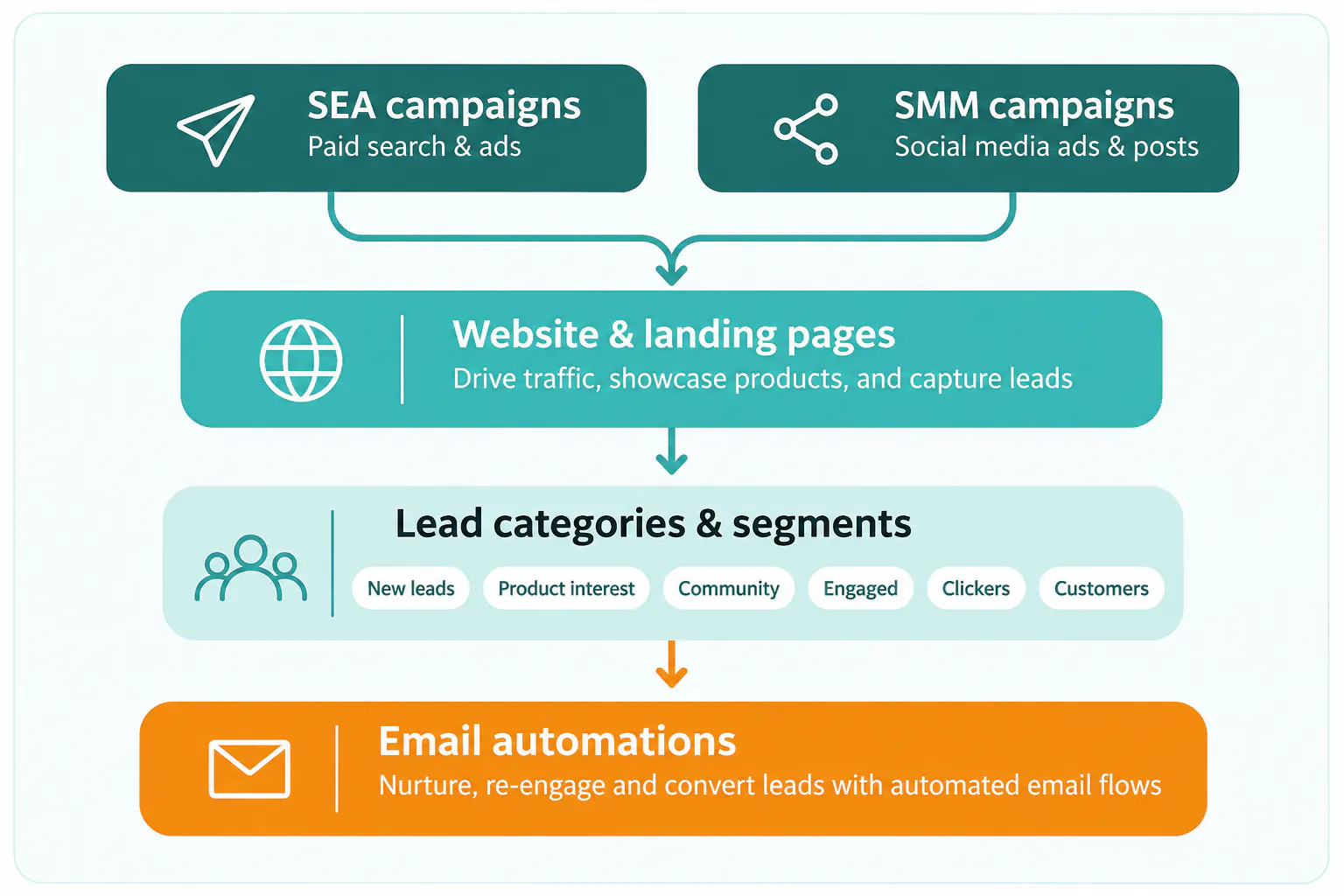
Visitors arriving through paid search, social campaigns, or other traffic sources interact with simulated websites, generating leads and customer activity. These contacts can then enter relevant email automation flows according to their group membership and behavior.
For example, students can build an abandoned-cart recovery sequence or a welcome series for newly acquired contacts. The sequence would then run each following simulation round with resulting engagement creating further opportunities for segmentation, follow-up communication, and conversion.
From building workflows to understanding results
Students can preview their automation's estimated performance and analyze results after each simulation round, including opens, clicks, website visits, sales, profit, unsubscribes, and goal completion.
This creates opportunities to learn not only how to configure workflows, but also how to interpret their effectiveness. Students discover the trade-offs between sending frequency, message relevance, discounts, customer engagement, and profitability.
For educators, the new activity extends the Simbound learning experience beyond individual campaigns into customer lifecycle marketing, behavioral segmentation, and marketing automation strategy. Students can experiment, compare outcomes across rounds, and improve their decisions using performance data.
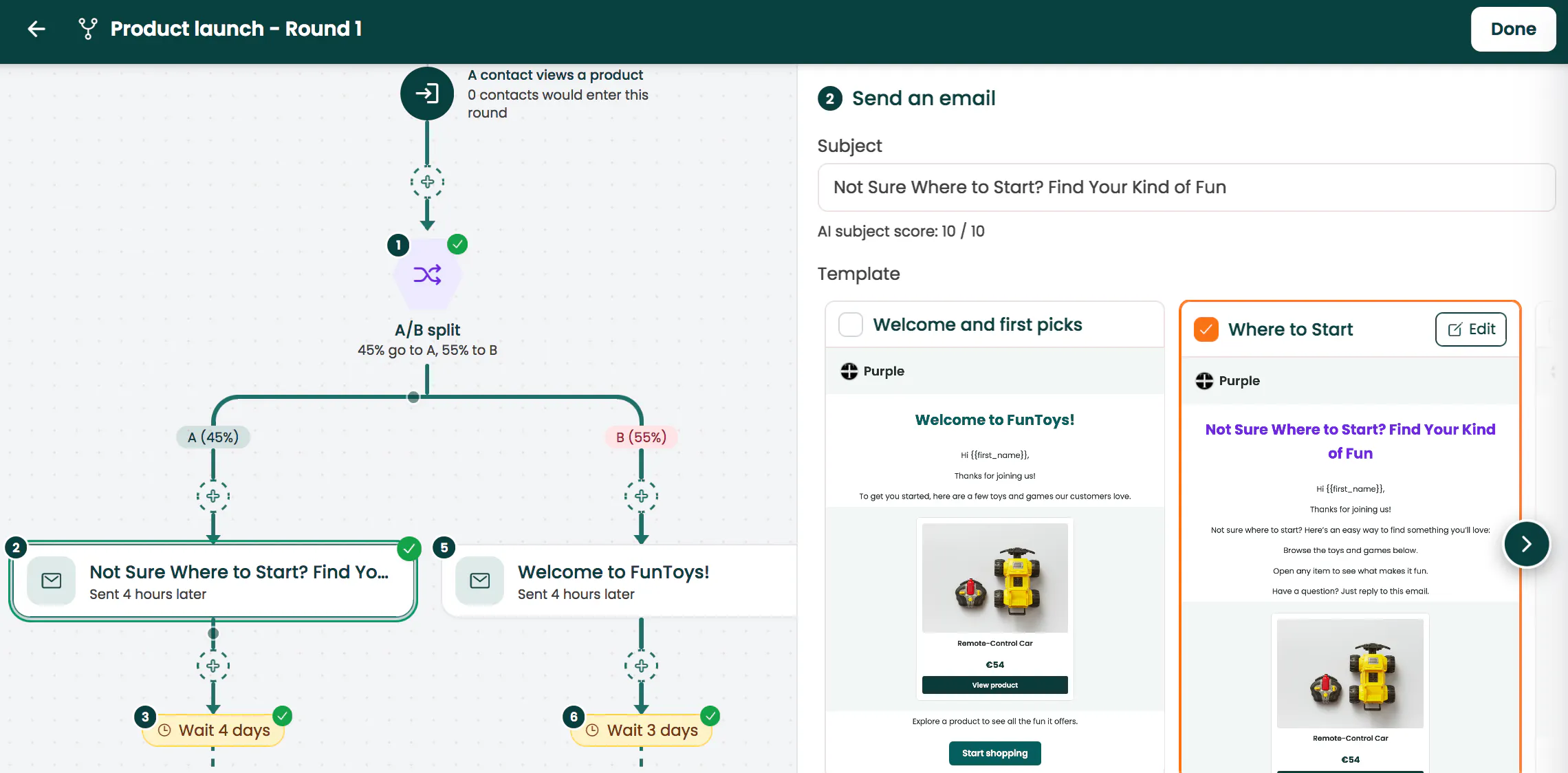
Email automation is an optional activity that instructors can enable or disable from their course settings, allowing them to adapt the simulation to their learning objectives.
Bringing marketing channels together
With email automation, Simbound provides a more connected view of the customer journey: from acquiring traffic and generating leads to nurturing relationships and encouraging repeat purchases.
The objective is not simply to teach students how to send automated emails, but to help them understand when to automate, whom to target, how to measure success, and how different marketing activities contribute to business results.
Explore the new Email Automation activity as part of the Simbound digital marketing simulation